


What Cannabis Research Revealed at 2024’s Biggest Industry Conferences
Cannabis science evolved dramatically in 2024, with groundbreaking research presented at major conferences reshaping how we understand this plant’s therapeutic potential, safety profile, and quality standards. These findings directly impact the products available at your local dispensary and the choices you make as a consumer.
Recent studies reveal precise dosing protocols for specific medical conditions, moving beyond the trial-and-error approach that frustrated many early cannabis users. Researchers now understand how different cannabinoid ratios affect anxiety, chronic pain, and sleep disorders, giving you clearer guidance when selecting products. Meanwhile, cultivation scientists have identified exactly which growing practices maximize beneficial compounds while minimizing contaminants, information that translates directly to product quality on dispensary shelves.
The conference presentations also addressed critical safety questions. New testing methods can detect pesticides and heavy metals at unprecedented levels, while pharmacology research clarified how cannabis interacts with common medications. For consumers, this means more transparent labeling and better-informed budtender recommendations.
Perhaps most importantly, 2024 research moved beyond THC-centric thinking. Scientists documented how minor cannabinoids like CBG, CBN, and THCV contribute unique effects, empowering you to choose products tailored to your specific wellness goals rather than simply chasing higher potency numbers.
This article translates complex scientific presentations into practical knowledge you can use immediately, whether you’re managing a health condition, exploring cannabis for the first time, or refining your product selection strategy.

Medical Cannabis Breakthroughs Taking Center Stage
Pain Management and Inflammation Studies
Recent conference presentations have highlighted promising developments in using cannabis for pain and inflammation management. Researchers are moving beyond the question of whether cannabis works to understanding which specific compounds and combinations deliver the best results.
A landmark study presented at this year’s conferences examined cannabinoid ratios for arthritis pain. Researchers found that a 1:1 ratio of CBD to THC provided significant relief for inflammatory joint conditions, with participants reporting reduced pain levels and improved mobility. Interestingly, higher CBD ratios (3:1 or 4:1 CBD to THC) showed particular promise for managing chronic pain without producing intoxicating effects, making them suitable for daytime use.
Delivery method research revealed important findings about effectiveness. Topical applications containing CBD and minor cannabinoids like CBG demonstrated localized anti-inflammatory benefits for arthritis when applied directly to affected joints. For systemic chronic pain, sublingual tinctures showed faster onset times compared to edibles, with effects appearing within 15-30 minutes versus 60-90 minutes.
Scientists also explored lesser-known cannabinoids for inflammation. CBG (cannabigerol) exhibited strong anti-inflammatory properties in preclinical studies, particularly when combined with CBD. THCA (the raw, non-intoxicating form of THC) showed potential for reducing inflammation without psychoactive effects.
These findings empower you to have more informed conversations with healthcare providers and dispensary staff about personalized pain management approaches. While research continues, understanding these cannabinoid ratios and delivery methods helps you make educated choices suited to your specific needs and lifestyle.
Mental Health Applications and Cautions
Recent research presented at 2024 cannabis conferences revealed promising yet complex findings regarding mental health applications. Scientists shared new data showing that specific cannabis formulations may offer relief for anxiety, PTSD, and depression when used appropriately, but they emphasized critical warnings that every consumer should understand.
Studies examining controlled cannabis use for anxiety disorders demonstrated that low-to-moderate doses of CBD-dominant products showed potential benefits for some participants. Researchers noted that the key factor was consistency in dosing and cannabinoid ratios. For PTSD treatment, preliminary findings suggested that certain terpene profiles combined with minor cannabinoids might help manage intrusive thoughts and sleep disturbances, though scientists stressed the need for further investigation.
However, conference presentations consistently highlighted significant concerns about high-THC products and mental health risks. Researchers emphasized that products containing THC levels above 20% showed increased associations with anxiety episodes, paranoia, and potential triggering of underlying mental health conditions. This research underscores why understanding product potency and starting with lower doses matters tremendously for safety.
Scientists also discussed CBG’s anti-inflammatory and antioxidant effects, which may contribute to mood regulation through different pathways than traditional cannabinoids. This emerging area of research suggests that minor cannabinoids deserve more attention in mental health applications.
The takeaway for consumers is clear: mental health applications of cannabis require careful consideration of product selection, THC content, and individual response. Researchers strongly recommend consulting healthcare providers before using cannabis for mental health concerns, particularly for anyone with a personal or family history of psychotic disorders. Education and informed decision-making remain your most powerful tools for safe, beneficial use.
The Minor Cannabinoid Revolution
CBG: The Mother Cannabinoid Gets Scientific Validation
While THC and CBD often dominate cannabis conversations, researchers are increasingly turning their attention to cannabigerol, or CBG. Often called the “mother cannabinoid” because other cannabinoids derive from its acidic form, CBG is finally receiving the scientific validation it deserves through rigorous laboratory studies and clinical investigations.
Recent conference presentations have highlighted CBG’s impressive anti-inflammatory properties. Research teams demonstrated how CBG interacts with the body’s endocannabinoid system differently than CBD or THC, potentially offering relief for inflammatory bowel disease and other chronic inflammatory conditions. These findings suggest CBG could become a valuable option for people seeking natural approaches to inflammation management.
The neuroprotective potential of CBG has also captured researchers’ attention. Studies presented at major cannabis science conferences show promising results for protecting brain cells from damage and supporting healthy neurological function. While this research is still in early stages, it opens exciting possibilities for future therapeutic applications.
Perhaps most surprisingly, CBG has demonstrated significant antibacterial properties, including effectiveness against drug-resistant bacteria strains. This discovery could have implications far beyond cannabis wellness products, potentially contributing to the global fight against antibiotic resistance.
For consumers, these developments mean CBG-focused products may become more widely available as manufacturers respond to growing scientific evidence. When exploring CBG options, look for products from transparent companies that provide third-party lab testing and clear cannabinoid profiles. This emerging cannabinoid represents an exciting frontier in cannabis science, empowering you with more choices for your wellness journey.

CBN and Sleep: Separating Hype from Science
Cannabinol (CBN) has been marketed as a powerful sleep aid, but recent research presented at 2024 cannabis conferences reveals a more nuanced picture. While many products tout CBN as “the sleepy cannabinoid,” scientists are urging consumers to temper their expectations.
Studies presented this year show that CBN’s sedative reputation may stem more from the presence of degraded terpenes in aged cannabis than from CBN itself. When researchers tested CBN in isolation, they found minimal sedative effects compared to placebo groups. However, when combined with other cannabinoids and terpenes—particularly myrcene and linalool—some participants reported improved sleep quality.
The challenge lies in dosing and individual variation. Research suggests that CBN may work differently for different people, with effects influenced by factors like metabolism, tolerance, and concurrent use of other substances. Most studies used doses significantly higher than what’s typically found in commercial products, raising questions about whether everyday CBN products contain enough of the cannabinoid to produce noticeable effects.
What does this mean for you? CBN products aren’t necessarily ineffective, but they’re likely not the miracle sleep solution some marketing suggests. If you’re considering CBN for sleep support, look for full-spectrum products that combine multiple cannabinoids and terpenes rather than isolated CBN. Keep realistic expectations, start with lower doses to assess your individual response, and maintain good sleep hygiene practices alongside any cannabinoid use.

Cultivation Science: Growing Smarter and Cleaner
Environmental Controls and Cannabinoid Production
Recent studies presented at 2024 cannabis conferences reveal fascinating connections between growing conditions and the chemical profiles that determine product quality. Understanding these relationships helps explain why cannabis from different sources can vary significantly in effects and flavor.
Research shows that light spectrum plays a crucial role in cannabinoid development. Plants exposed to specific wavelengths of UV light, particularly UV-B, produce higher concentrations of THC and CBD as a protective response. The color temperature of grow lights also influences terpene production—the aromatic compounds that give cannabis its distinctive scents and contribute to effects. Blue-spectrum lighting tends to promote compact growth and higher terpene retention, while red-spectrum light can increase overall cannabinoid yields.
Temperature management proves equally important. Studies demonstrate that slightly cooler nighttime temperatures during flowering—around 68-72°F compared to 75-80°F daytime temperatures—can enhance terpene preservation and increase THC content by up to 15%. Excessive heat degrades both cannabinoids and terpenes before harvest.
Humidity control throughout the growth cycle affects final product quality too. Lower humidity levels during the final weeks of flowering encourage resin production while reducing mold risk, resulting in cleaner, more potent products.
These findings have practical implications for consumers. Products from cultivators who carefully control environmental conditions typically offer more consistent potency and richer terpene profiles. When shopping, consider asking your dispensary about growing practices—knowledgeable cultivators who invest in environmental controls generally produce superior quality cannabis with more predictable effects and better flavor profiles.
Contamination Prevention Research
Recent research presented at 2024 cannabis conferences highlights significant advances in protecting consumers from contaminants. Scientists are focusing on four primary concerns: mold, pesticide residues, heavy metals, and harmful bacteria that can compromise product safety.
New testing innovations are making contamination prevention more effective and accessible. Rapid DNA sequencing now identifies specific microbial strains in hours rather than days, allowing faster responses to potential issues. Researchers have also developed portable spectroscopy devices that detect pesticide residues without destroying product samples, making routine testing more practical for smaller producers.
Studies revealed that certain cultivation practices significantly reduce heavy metal absorption from soil, particularly through careful pH management and substrate selection. This empowers growers to prevent contamination rather than simply testing for it afterward.
For consumers, these advances translate into safer products. Dispensaries implementing comprehensive quality control standards now utilize multiple testing methods to verify product purity. When shopping, look for products with detailed lab reports showing results for all four contamination categories. Understanding these testing protocols helps you make informed choices and supports producers prioritizing your safety through rigorous quality measures.
Sustainable Practices Backed by Data
Recent studies presented at 2024 cannabis conferences highlight promising advances in environmentally responsible cultivation. Researchers have documented that regenerative agriculture techniques—including cover cropping and organic soil amendments—can increase cannabinoid yields by up to 15% while reducing synthetic fertilizer use by 40%. Water conservation studies show that precision irrigation systems combined with drought-resistant cultivars can cut water consumption by nearly 30% without compromising plant quality. Energy-efficient growing methods are also gaining traction, with LED lighting systems reducing electricity use by 50% compared to traditional high-intensity discharge lamps. These findings demonstrate that sustainable cultivation practices not only benefit the environment but can also produce higher-quality cannabis with better terpene profiles and cannabinoid content. For consumers, this means that choosing products from cultivators who prioritize these methods supports both ecological health and product excellence. As the industry matures, data-driven sustainability is becoming a marker of responsible, forward-thinking producers.
Terpenes: More Than Just Aroma
The Entourage Effect: New Evidence
For years, the entourage effect has been discussed as a theory that cannabinoids and terpenes work better together than in isolation. Recent 2024 research is transforming this concept from speculation into documented science, giving you concrete reasons to consider full-spectrum products.
New clinical studies presented at major cannabis conferences have shown that combining CBD with specific terpenes like myrcene and limonene produces measurably different effects than CBD alone. Researchers tracked patient responses and found that full-spectrum extracts often required lower doses to achieve the same therapeutic outcomes compared to isolated cannabinoids, suggesting genuine synergistic interactions.
One particularly compelling study examined pain management, comparing THC isolate to full-spectrum extracts containing the same THC levels plus naturally occurring terpenes and minor cannabinoids. Participants using full-spectrum products reported more effective relief with fewer side effects, providing real-world evidence of the entourage effect in action.
Scientists are also identifying specific terpene-cannabinoid combinations that enhance particular effects. For example, the terpene beta-caryophyllene appears to amplify CBD’s anti-inflammatory properties by activating similar receptors in your body’s endocannabinoid system.
What does this mean for you? When shopping for cannabis products, understanding that the complete plant profile matters can help you make more informed choices. Full-spectrum and broad-spectrum products may offer advantages over isolates, though individual responses vary. This emerging research empowers you to ask better questions at your dispensary about product composition and choose options aligned with your wellness goals.
Terpene-Targeted Product Development
The cannabis industry is moving beyond simply listing terpene content to strategically designing products around specific experience profiles. Cultivators now select and breed strains based on desired terpene combinations, while manufacturers blend extracts to achieve consistent effects. This approach, informed by recent research, recognizes that terpenes like myrcene, limonene, and pinene work together with cannabinoids to shape your experience.
Some companies are developing products targeting specific needs: calming evening formulations might feature linalool and myrcene, while focus-oriented products could emphasize pinene and limonene. This precision allows you to choose products based on how you want to feel, rather than relying solely on indica or sativa classifications.
Quality-focused producers are also investing in post-harvest techniques that preserve delicate terpenes, which can degrade during processing. Flash-freezing immediately after harvest and low-temperature extraction methods help maintain the full terpene profile, ensuring the final product delivers the intended experience.
As this research translates into better products, you benefit from more predictable, personalized options. Understanding terpene profiles empowers you to make informed choices that align with your wellness goals and preferences, representing a significant step forward in cannabis product development.
Safety and Dosing: What Researchers Want You to Know
Conference researchers consistently emphasized that responsible cannabis consumption begins with understanding proper dosing—especially for newcomers. Dr. Sarah Chen’s presentation at the International Cannabis Research Symposium highlighted that the golden rule remains “start low and go slow.” For edibles, this means beginning with 2.5 to 5 milligrams of THC and waiting at least two hours before considering additional consumption, as effects can take 30 minutes to two hours to manifest.
Emerging research on product safety revealed important distinctions between consumption methods. Inhalation produces effects within minutes but typically lasts 1-3 hours, while edibles create longer-lasting effects of 4-8 hours. This timing difference makes edibles particularly challenging for dose management, leading researchers to recommend them only after users understand their personal tolerance levels.
Several presenters discussed risk factors that deserve attention. People with personal or family history of psychotic disorders should consult healthcare providers before using high-THC products. Pregnant or breastfeeding individuals should avoid cannabis entirely, as research continues to examine potential developmental impacts. Mixing cannabis with alcohol or medications requires caution, as interactions can intensify effects unpredictably.
Researchers also addressed the importance of product testing and transparency. Third-party lab testing ensures accurate cannabinoid content and screens for contaminants like pesticides, heavy metals, and mold. Conference data showed significant variations between labeled and actual THC content in untested products—sometimes exceeding 50 percent discrepancy.
For those managing specific health conditions, working with knowledgeable healthcare providers familiar with cannabis therapeutics provides the safest approach. Self-experimentation should proceed methodically, keeping detailed records of products used, doses, timing, and effects experienced. This personalized data becomes invaluable for finding effective, safe consumption patterns that support your wellness goals while minimizing adverse effects.
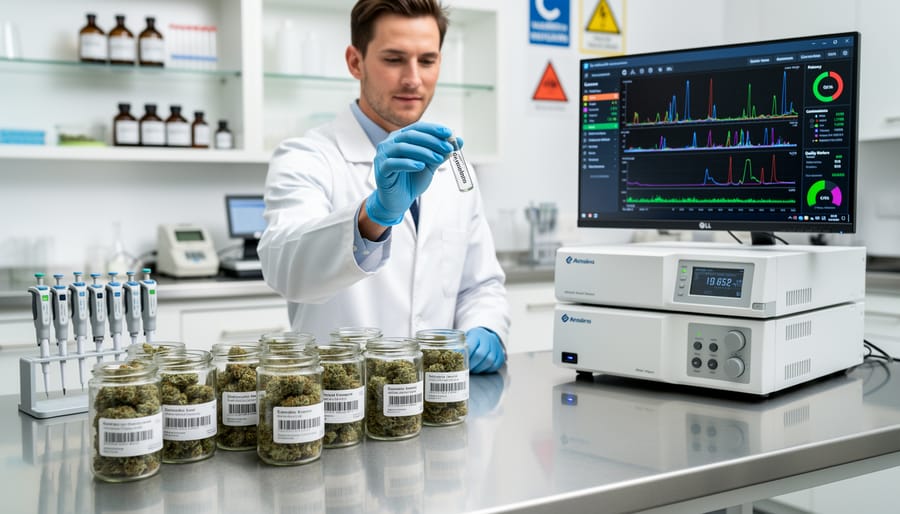
Testing and Quality Standards Advancing
Recent cannabis research conferences have highlighted significant advances in testing and safety standards, with scientists working to create more reliable methods for measuring what matters most to you as a consumer. These developments focus on three key areas: detecting contaminants more accurately, standardizing cannabinoid measurements across different laboratories, and establishing meaningful quality benchmarks.
Laboratory testing has evolved beyond basic potency measurements. Researchers presented new techniques for identifying pesticides, heavy metals, and microbial contaminants at lower detection levels than previously possible. This means safer products reaching dispensary shelves. Additionally, scientists are developing standardized methods to measure terpene profiles more consistently, helping you understand the aromatic compounds that contribute to each strain’s unique effects and flavor.
One exciting advancement involves creating reference materials that laboratories can use to calibrate their equipment. Think of these as universal standards that ensure a product tested in one facility will show similar results in another. This consistency helps you make more informed comparisons between products and brands.
Quality metrics now extend beyond just THC and CBD percentages. Researchers emphasize that total cannabinoid content, terpene diversity, and absence of contaminants provide a more complete picture of product quality. Some studies presented at recent conferences suggest that consumers should look for products with detailed terpene information, as these compounds work together with cannabinoids to create your experience. This research empowers you to move beyond choosing products based solely on THC levels and instead consider the full chemical profile that determines quality and effects.
The research presented at 2024 cannabis conferences demonstrates a clear path forward for consumers seeking quality, safety, and effectiveness in their cannabis products. These scientific advances aren’t just academic—they translate directly into tangible benefits that improve your cannabis experience and overall well-being.
As cultivation techniques become more refined and standardized, you can expect products with more consistent effects and potency. The emphasis on cannabis product safety means better testing protocols and cleaner products free from contaminants. Emerging cannabinoid research opens doors to new therapeutic possibilities, while enhanced terpene understanding allows for more targeted product selection based on your specific needs.
The key takeaway is simple: staying informed empowers you to make better choices. As research continues to evolve, the cannabis landscape will only become more sophisticated and consumer-friendly. Take advantage of this progress by seeking products from companies that prioritize rigorous testing, transparent labeling, and science-backed cultivation practices. Don’t hesitate to ask questions at your dispensary about testing results, growing methods, and cannabinoid profiles.
The future of cannabis is bright, driven by dedicated researchers, responsible cultivators, and informed consumers like you. This ongoing scientific exploration benefits the entire community—from medical patients finding relief to recreational users seeking quality experiences. By choosing education over guesswork and supporting evidence-based practices, you contribute to an industry that values your health, safety, and satisfaction above all else.