

What Is Trust and Transparency in Cannabis (and Why Does It Matter)?
Trust and transparency in cannabis mean clear, verifiable information about how a product was grown, tested, and handled from cultivation to your hands. In an industry where quality and safety can vary dramatically between producers, these principles separate responsible businesses from those cutting corners. When a cannabis company operates with transparency, you can trace every step of production, review independent lab results, verify pesticide-free growing practices, and understand exactly what you’re consuming.
The stakes here are personal. Cannabis enters your body, and what you don’t know can affect your health, your experience, and your wallet. Transparency protects you from contaminated products, misleading potency claims, and environmental practices that contradict your values. It’s the difference between a producer who openly shares third-party test results and one who provides only minimal information required by law.
This article breaks down what genuine transparency looks like in practice, how reputable cannabis businesses demonstrate it through testing protocols and supply chain disclosure, and the specific signs that signal a company you can trust. You’ll learn to recognize the hallmarks of transparent operations, understand why certain practices matter more than others, and develop a practical framework for evaluating any cannabis source. Whether you’re new to cannabis or a longtime consumer, knowing how to identify trustworthy sources empowers you to make safer, more informed choices aligned with your health and sustainability priorities.
What Trust and Transparency Mean in Cannabis
In the cannabis industry, trust means having confidence that the product you’re purchasing is safe, accurately labeled, and produced to consistent quality standards. It’s the assurance that a dispensary, cultivator, or manufacturer stands behind their products and operates with integrity. Transparency is the mechanism that builds that trust, it’s the practice of openly sharing verifiable information about where cannabis comes from, how it’s grown, what it contains, and how it’s been tested.
Unlike general business transparency, which might involve financial disclosures or customer reviews, cannabis-specific transparency revolves around product safety and regulatory accountability. This includes meeting mandatory state testing requirements, maintaining detailed records through seed-to-sale tracking systems, and providing customers with laboratory results for every batch sold. Several core concepts define this framework:
- Trust
- Confidence that cannabis products are safe, accurately labeled, and produced by businesses that prioritize consumer welfare over shortcuts.
- Transparency
- The practice of openly sharing verifiable information about sourcing, cultivation methods, testing results, and manufacturing processes.
- Chain of Custody
- The documented record of every person and facility that handles cannabis from seed to final sale, creating accountability at each stage.
- Certificate of Analysis (COA)
- A laboratory document showing test results for potency, contaminants, pesticides, and other safety markers for a specific product batch.
- Seed-to-Sale Tracking
- Software systems mandated by most states that monitor cannabis plants and products throughout their entire lifecycle, creating an auditable trail.
- Third-Party Testing
- Independent laboratory analysis conducted by facilities not affiliated with the producer, ensuring unbiased verification of product safety and potency.
Beyond these regulatory minimums, many reputable cannabis businesses practice voluntary disclosure, sharing cultivation techniques, ingredient sourcing, staff training protocols, and even facility photos. This goes further than compliance, demonstrating a genuine commitment to keeping customers informed and building long-term relationships based on openness rather than opacity.
How Trust and Transparency Work in the Cannabis Industry
Testing and Quality Assurance
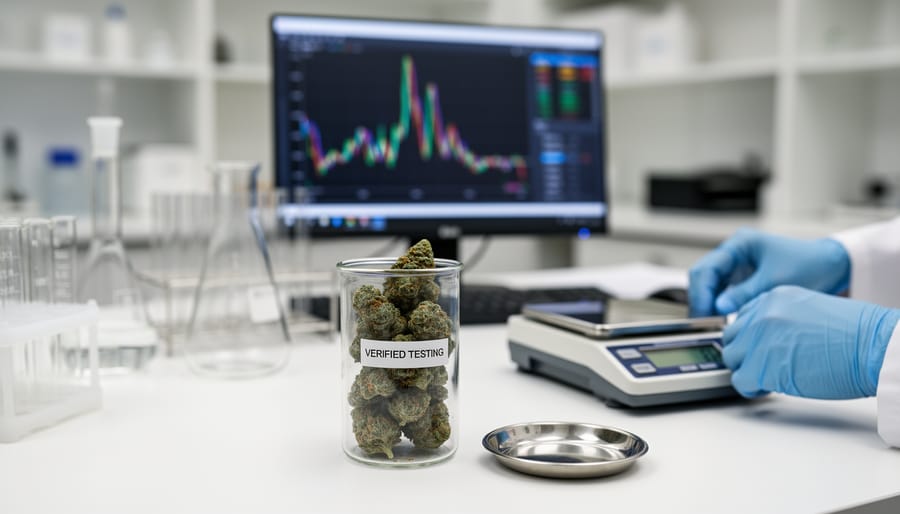
Third-party laboratory testing serves as the foundation of product safety in cannabis. Independent labs analyze samples to confirm cannabinoid levels, THC, CBD, and others, so the percentage on the label matches what’s actually in the product. This verification matters for dosing accuracy and helps consumers avoid unexpectedly strong or weak products.
These labs also screen for contaminants that pose health risks: pesticides, heavy metals, residual solvents from extraction, microbial growth like mold and bacteria, and mycotoxins. Each test identifies whether a product meets safety thresholds established by regulators or exceeds limits that could cause harm.
Results appear on a Certificate of Analysis (COA), a document that details every compound tested and lists pass or fail outcomes. Reputable dispensaries make COAs available on request or display them publicly, sometimes with QR codes linking to lab reports. When reading a COA, check the batch number matches your product, verify the test date is recent, confirm all required tests show “pass,” and note the lab’s name to ensure it’s licensed and independent.
As industry findings continue to refine testing standards, consumers gain clearer insight into what they’re purchasing, turning transparency from concept into verifiable fact.
Traceability and Record-Keeping
In regulated cannabis markets, traceability systems create a digital paper trail that follows every plant and product from the moment a seed goes into soil until a consumer walks out of a dispensary with their purchase. These seed-to-sale tracking platforms, mandated by state regulators, require licensed businesses to log each milestone: when plants are tagged, when they’re harvested, how much biomass enters processing, what products result, and which retail locations receive inventory.
This constant data feed flows into state-run databases that regulators can audit in real time. If a contamination issue surfaces, officials can trace the affected batch backward through processing to the specific cultivation room, and forward to identify every package still in circulation. The system prevents diversion into illegal markets and enables swift recalls when problems arise.
For consumers, this infrastructure means the product in your hand has a documented history. Dispensaries can show you where your flower was grown, when it was tested, and how long it’s been on the shelf. When a business openly shares this chain-of-custody information rather than treating it as proprietary, you’re seeing transparency in action, proof that accountability exists beyond the transaction counter.
Core Components of a Transparent Cannabis Operation
A transparent cannabis operation rests on five interconnected pillars that work together to build consumer confidence. The strongest businesses don’t just meet minimum regulatory requirements, they exceed them, treating transparency as a competitive advantage rather than a compliance burden.
Verified Third-Party Testing
Every product should carry a Certificate of Analysis from an independent laboratory, not an in-house facility. Look for dispensaries that display batch-specific test results prominently, either on packaging, shelf labels, or through QR codes that link to full reports. The best operations test for a comprehensive panel: cannabinoid potency, terpene profiles, pesticides, heavy metals, residual solvents, microbials, and mycotoxins. If staff can’t immediately show you recent test results or explain what the numbers mean, that’s a warning sign.
Sourcing and Cultivation Disclosure
Transparent operators tell you where their cannabis comes from. They identify specific farms or cultivation partners, explain their growing methods (indoor, outdoor, greenhouse), and disclose whether products are organic, pesticide-free, or grown using sustainable practices. Advanced cultivation systems that prioritize quality over volume deserve recognition, and reputable businesses proudly share these details. Ask where a product was grown, vague answers like “locally sourced” without specifics suggest something to hide.
Manufacturing Standards and Processes
For extracts, edibles, and other manufactured products, look for businesses that explain their extraction methods, ingredient sourcing, and quality control procedures. Clean operations disclose what solvents they use (CO2, ethanol, hydrocarbon), whether they add terpenes back after extraction, and how they ensure consistency across batches. Findings from cannabis research continue to refine best practices for extraction and formulation, and transparent manufacturers stay current with evolving standards.
Employee Knowledge and Training
Staff education reflects a business’s commitment to transparency. Budtenders should answer detailed questions about products, effects, testing, and sourcing without deflecting or guessing. The best dispensaries invest in ongoing staff training, ensuring every team member can read lab results, explain terpene effects, and guide customers toward appropriate products based on individual needs and experience levels.
Why Trust and Transparency Matter for Consumers

Safety and Health Protection
Transparency acts as your first line of defense against contaminated cannabis products. When dispensaries and brands openly share third-party lab results, you can verify that products are free from pesticides, heavy metals, residual solvents, and microbial contaminants like mold or bacteria. Without this information, you’re essentially gambling with your health.
Accurate potency labeling prevents dangerous overconsumption. A product claiming 10mg THC per serving that actually contains 50mg can trigger severe anxiety, paranoia, or worse, especially for new users or those with low tolerance. Transparent testing eliminates this risk.
Opaque supply chains hide problems until they reach consumers. In recent years, recalls for contaminated products have affected thousands of users who had no way to verify safety beforehand. When businesses refuse to disclose sourcing, testing methods, or ingredient lists, they’re asking you to trust blindly. That’s a risk no consumer should take with something they’re ingesting or inhaling.
Empowerment Through Education
Beyond safety, transparency gives you the information to choose cannabis that actually works for your specific needs. When a dispensary provides complete details, strain genetics, terpene profiles, cultivation methods, cannabinoid ratios, you can match products to your wellness goals rather than guessing. A consumer managing anxiety can select strains with higher CBD and specific calming terpenes. Someone seeking creative focus can identify sativa-dominant varieties with energizing profiles. New users learn appropriate starting doses. Experienced consumers discover nuanced options they’d otherwise miss.
This educational transparency transforms cannabis from a one-size-fits-all commodity into a personalized wellness tool. You can align purchases with your values too, choosing organic cultivation, supporting local growers, or avoiding products with certain additives. Access to sourcing information, growing success metrics, and business practices lets you vote with your wallet. The more you understand about what you’re consuming and where it comes from, the more control you have over your cannabis experience and health outcomes.
How Dispensaries and Brands Build Trust

Leading cannabis dispensaries and brands establish credibility through concrete, verifiable actions rather than marketing promises. The businesses that succeed in building lasting customer relationships are those that make transparency a foundational operating principle, not an afterthought.
The most trusted operators implement several core practices:
- Publishing complete Certificates of Analysis on their websites with full cannabinoid profiles and contaminant test results for every product batch
- Displaying transparent pricing structures that clearly break down product costs, taxes, and any fees before checkout
- Providing detailed strain information including terpene profiles, growing methods, and harvest dates
- Maintaining verified customer review systems that display both positive and critical feedback without censorship
- Earning third-party sustainability certifications such as organic, biodynamic, or regenerative agriculture credentials
- Openly discussing cultivation practices, including pest management strategies, nutrient programs, and energy sources
Beyond documentation, forward-thinking businesses invite customers behind the scenes. Some cultivators offer scheduled facility tours where consumers can see growing operations firsthand and ask questions directly to cultivation teams. Others host educational workshops covering topics from dosing strategies to extraction methods, applying insights like those discussed in 2024 conference takeaways to consumer education programs.
Staff training represents another transparency cornerstone. Dispensaries that invest in comprehensive employee education create teams capable of answering technical questions, explaining test results, and guiding customers toward products that match their needs rather than pushing high-margin items.
The most effective transparency practice is responsive, honest communication. Trustworthy businesses answer questions promptly, admit when they don’t know something, acknowledge mistakes publicly, and explain their decision-making processes. They treat customer concerns as opportunities to demonstrate integrity rather than problems to minimize.
Red Flags: Recognizing Lack of Transparency
– Prompt Tokens: ~3,500
– Response Tokens: ~450
– Total Estimated: ~3,950
—
Spotting transparency red flags protects you from substandard products and unreliable businesses. Start with lab results. Any dispensary or brand that cannot produce current Certificates of Analysis for their products, or that displays results but refuses to explain them, is hiding something. Products without batch-specific testing data are impossible to verify for potency or contaminants.
Vague product descriptions signal another problem. If a label lists only strain name and THC percentage without cultivation method, terpene profile, or ingredient details, the business isn’t committed to informed consumer choices. Watch for buzzwords like “premium” or “craft” without supporting evidence.
Staff behavior reveals a lot. Budtenders who dodge questions about sourcing, growing practices, or testing procedures either lack training or work for a business that doesn’t prioritize education. Legitimate operations train employees to explain their products thoroughly and welcome detailed questions.
Missing supply chain information is a major warning sign. If you cannot determine where a product was grown, who manufactured it, or what inputs were used, you’re buying blind. Trustworthy brands readily share cultivation location, organic certifications, and processing methods.
Price suspiciously below market average often indicates compromised quality, either untested products, inferior cultivation practices, or corners cut during manufacturing. While deals exist, consistently rock-bottom pricing without explanation suggests something’s off.
Finally, reluctance to address concerns or defensive responses to reasonable questions about safety or quality indicate a business that values sales over customer wellbeing. Walk away from any operation that treats transparency inquiries as inconvenient or confrontational.
Common Questions About Cannabis Transparency
Navigating cannabis transparency can raise practical questions, especially if you’re new to legal cannabis or switching to a more regulated market. Here are clear answers to the most common concerns consumers bring to dispensaries.
How do I verify a product’s lab results?
Ask to see the Certificate of Analysis for any product you’re considering, either displayed in-store, printed on request, or accessible through a QR code on the packaging. Legitimate dispensaries will provide this without hesitation, and the COA should list the testing lab’s name, license number, and contact information so you can verify it independently.
What should a Certificate of Analysis include?
A complete COA lists cannabinoid percentages (THC, CBD, etc.), confirms the absence of contaminants like pesticides, heavy metals, residual solvents, and microbial hazards, and includes the batch number, test date, and lab accreditation. If any category is missing or marked “not tested,” consider it a warning sign.
Are all dispensaries required to test products?
Testing requirements vary by state and country, but most legal markets mandate third-party testing before products reach retail shelves. However, the scope of required tests differs, some jurisdictions test only for potency, while others require full contaminant screening, so transparency matters even in regulated markets.
What questions should I ask budtenders about transparency?
Ask where the product was grown, whether the cultivation uses pesticides, how recent the test results are, and whether the dispensary offers tours or detailed sourcing information. A knowledgeable, forthcoming response signals a business that prioritizes openness, while evasive answers or irritation at questions should raise concerns.
Beyond formal test results, trust your instincts when evaluating a dispensary’s transparency culture. Staff who can discuss cultivation practices, explain COA details without consulting a manager, and openly acknowledge what they don’t know demonstrate the kind of honesty that builds lasting customer relationships. If a business treats your questions as interruptions rather than opportunities to educate, that attitude reflects deeper transparency issues worth considering before you buy.
Trust and transparency aren’t optional extras in the cannabis industry, they’re the foundation of safe, informed choices. As you navigate dispensaries, brands, and products, remember that you have the right to know exactly what you’re purchasing, where it comes from, and how it was produced. The businesses that embrace openness aren’t just following regulations; they’re demonstrating respect for your health, your autonomy, and your decision-making power.
Don’t settle for vague answers or missing information. Ask to see lab results. Inquire about cultivation methods. Request details about sourcing and testing protocols. Reputable dispensaries welcome these questions because they’re proud of their practices. Your willingness to dig deeper not only protects you but also raises standards across the entire industry, rewarding businesses that prioritize accountability and encouraging others to follow suit.
We’re committed to transparency in everything we do, from the products on our shelves to the conversations we have with every customer. Visit us to see what cannabis retail looks like when trust comes first, where every question gets an honest answer and every purchase is backed by verifiable quality.